Those first few weeks of pregnancy can feel like magic and madness all at once. Between nausea, mood swings, and sudden food cravings, figuring out what to eat becomes more confusing than comforting – especially when nutrition feels like a full-time job. (Problem-Agitate-Solve: You want to eat right, but not knowing what’s right makes every bite feel like a guess.)
Some days, toast might feel like the only thing you can handle, while on others, you’re questioning if papaya is off-limits or not. That’s exactly where a 1st trimester pregnancy diet chart can make a real difference, helping you balance your baby’s nutritional needs with your own energy levels. Instead of guessing, you get gentle guidance on what to include, what to limit, and how to make every meal count without stress.
At Eva Woman Care, we’re here to clear the fog and make this feel easy again. We’ve helped hundreds of Navi Mumbai mums just like you feel confident, cared for, and fully supported in every trimester.
Key Nutrients Required in the 1st Trimester
The first few weeks can feel like a blur of excitement and sudden food dislikes, but your little one’s development begins now. The right nutrients can lay the foundation for your baby’s brain, bones, and tiny organs.
Vital Vitamins and Minerals
Folic acid takes centre stage here. Found in spinach, lentils, and oranges, it protects your growing baby from neural tube defects. Calcium works closely with Vitamin D to form those tiny bones and teeth your baby will soon grow, so add milk, curd, and a bit of sunlight to your routine. Iron found in dates, spinach, and jaggery helps avoid fatigue and supports blood supply to your baby. Don’t forget zinc – whole grains and seeds cover that need beautifully.
Macronutrient Needs
Your baby’s cells and tissues are built on what you eat. Protein from lentils, paneer, tofu, and eggs lays the groundwork. Carbs keep your energy stable, so look for oats and brown rice that digest slowly. Dietary fibre from vegetables and whole fruits keeps digestion ticking and gas away. Try almond oil or fish for omega-3s and manage fat intake with dairy and nuts. Each plays a part in keeping both you and baby energised.
Daily Diet Chart for the 1st Trimester
Planning your daily meals makes food choices easier and nausea manageable. A consistent meal chart keeps balance even on unpredictable days.
Sample Meal Plan Breakdown
Start breakfast with moong chilla, upma, or paratha with curd. Fruit like banana or apple adds sweetness and fibre. For lunch, go with dal, rice or roti, subzi, and salad. Add curd for digestion. Dinner should stay light – vegetable soup, khichdi, or soft roti with sabzi helps ease digestion before sleep. Space your meals every 3-4 hours to maintain sugar levels and avoid acid reflux.
Snack Options and Recipes
Mid-morning snacks like soaked almonds or coconut water with murmura help you stay hydrated and curb nausea. In the evening, settle with roasted makhanas or a small bowl of poha. If nausea hits, keep some lemon water or ajwain tea close by. One quick recipe: mash a banana with a spoon of peanut butter and top it with chia seeds. Easy, filling, and full of nutrients.

Diet Tips to Manage 1st Trimester Symptoms
From morning sickness to sudden queasiness and cravings that come out of nowhere – it all begins here. Food can either hurt or heal in these moments.
Addressing Common Discomforts
Coconut water, cucumber slices, and soups help with hydration when nothing else goes down. Dry snacks like khakhra or toast first thing in the morning can soothe that nauseous feeling. Toss in some ginger tea or fennel to calm your digestive tract. If certain smells or foods suddenly make you turn away, substitute them. Instead of eggs, try lentils. Instead of milk, try nut-based alternatives. Keep switching till your taste settles.
Combating Fatigue and Digestive Issues
Lentils, beetroot, and raisins can put iron and strength back in your system. Cabbage, carrots, and fruits like guava offer fibre to ease constipation. For heartburn, spread your meals out and avoid spicy foods just before bedtime. Include fennel seeds, cumin, and a pinch of ginger which help control acidity. Keeping small gaps between meals can reduce that burning sensation.
Foods to Avoid in the 1st Trimester
Everyone seems to offer advice – some helpful and some confusing. But there are certain foods that need to stay off your plate for now.
Harmful and Risk-Prone Foods
Say no to raw or half-cooked meats, runny eggs, or sushi – they carry bacteria dangerous to your baby. Anything with too many preservatives like packaged chips or sauces lowers food quality and impact. Unwashed fruits or street salads might bring hidden troubles. When unsure, wash, steam, or skip. Better safe than sorry in these early weeks.
Dietary Restrictions and Lifestyle Adjustments
Coffee lovers, cut back to one mild cup or switch to green tea or warm lemon water. If you’re sensitive to gluten or lactose, try ragi, bajra, amaranth, and almond milk. Don’t fall for myths like “eat for two” or skipping papaya entirely – the facts matter. Focus on balanced choices and avoid hearsay. Talk to our team at Eva Woman Care to clear doubts backed by experience, not fear.
Supplements and Hydration in Early Pregnancy
Even the best meals sometimes miss a few nutrients. That’s where smart supplementation and good hydration come into play.
Necessary Supplements and Vitamins
A good prenatal multivitamin everyday is a smart move. It answers for days when your appetite isn’t your friend. Iron keeps your strength up while DHA supports your baby’s brain. Ask our gynaecologist Dr. Grishma Ranjangaonkar about adding iodine and Vitamin D – they work together to balance metabolism and bone health. Always take supplements with food for better absorption and gentler digestion.
Hydration and Liquid Intake
About 10-12 glasses of water a day keeps headaches, dizziness, and constipation away. If plain water feels boring, try fruit-infused water, buttermilk, or herbal teas like chamomile. Watermelons, cucumbers, and oranges are foods that refresh and hydrate. Keeping a water bottle nearby is a tiny act of self-care with a giant effect.
Special Considerations and Customisations
No two pregnancies are alike. Whether you’re plant-based or dealing with specific health conditions, your plate can still nourish you beautifully.
Dietary Preferences and Health Conditions
Vegetarian mums can reach for protein in dals, sprouts, quinoa, paneer, and tofu. If gluten bothers you, use millets or rice instead of wheat. For lactose-sensitive women, almond milk, oats, and ghee serve well. Listen to your body and trust your instincts. For deeper guidance, our clinic checks food tolerances alongside nutritional needs for your unique plan.
Medical Dietary Needs
For those with gestational diabetes, replace maida with whole grains and monitor portion sizes. Dates and jaggery help with anaemia when taken with Vitamin C sources like lemon. To avoid undernutrition, don’t skip meals no matter how small. We help you eat consistently without overwhelming your body. With Dr. Grishma’s experience, even high-risk cases find safe and nourishing solutions customised for them.
Food Cravings and Confusion? You’re Not Alone
Figuring out what to eat early in pregnancy can feel like a blend of excitement, confusion, and constant Googling. Some days you feel like a nutrition expert, and other days, a slice of toast makes you panic. Is this safe?
What you really need is something simple, balanced, and calming, not another complicated list. That’s where a 1st trimester pregnancy diet chart comes in handy. It gives you clear, reassuring guidance on what to eat, helping you trust your instincts while staying nourished and confident through every craving and concern.
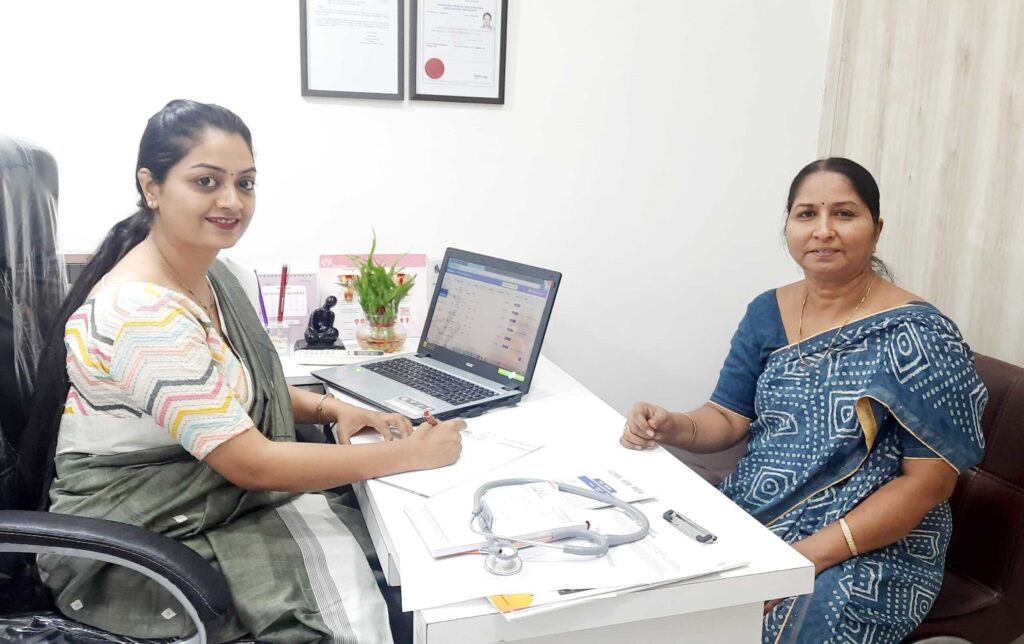
A doctor and patient have a consultation in a Navi Mumbai WomanCare clinic setting.
At Eva Woman Care, we help you feel confident about every bite. Our experts design diet care with both your cravings and baby’s needs in mind.
Come talk to us and let’s plan what works best for you.