
The fertile window as it actually works, what to sort out three months ahead, which tracking method answers which question, and the point at which waiting stops being sensible.
Reviewed by Dr. Grishma Ranjangaonkar, MBBS, DGO, ICOG Fellowship in Gynecological Endoscopy · Eva WomanCare Clinic, Vashi
Most couples conceive within a year, and most of the advice circulating about how to speed that up is either untested or actively wrong. This guide covers what genuinely changes the odds, what to prepare before you start, and the specific situations where waiting the full twelve months is the wrong call.
Conception has a much smaller window than most couples assume. An egg survives around 12 to 24 hours after it is released. Sperm survive up to five days in the right cervical mucus. That gives roughly six days a cycle in which intercourse can result in pregnancy, and only the last two of those carry the highest chance.
The second thing people get wrong is when that window falls. The common belief that ovulation happens on day 14 is true only for a textbook 28-day cycle. What is actually fixed is the second half: the luteal phase runs about 14 days in almost everyone. So ovulation is roughly 14 days before your next period, not 14 days after your last one. In a 34-day cycle that puts it around day 20. In a 24-day cycle, around day 10.
The single most useful thing to know before you start worrying is what normal looks like. Most couples do not conceive in the first month, and that is not a sign of a problem.
Read that chart carefully, because it says two things at once. First, the great majority of couples conceive within a year, and of those who do not, about half will in the second year. Second, age genuinely matters, and it matters gradually rather than falling off a cliff at any particular birthday. The practical implication is not panic. It is that the threshold for seeking help should come down as age goes up.
The standard advice is twelve months. That advice assumes you are ovulating regularly, that nothing in your history points to a problem, and that you are under 35. Change any of those and the answer changes.
|
Your situation
|
When to seek help
|
Why
|
|---|---|---|
A first fertility assessment is not an ordeal, and it is not expensive relative to what people fear. It asks three questions: are you ovulating, are the tubes open, and is the sperm adequate.
|
Test
|
What it answers
|
When it is done
|
|---|---|---|
There is a reason preconception care is measured in months rather than weeks. A sperm takes roughly two and a half months to be made, so anything a man changes today shows up in a sample about three months later. On the other side, the follicle that releases next month’s egg began its final growth months ago. Add the practical items that simply cannot be done once you are pregnant, such as a live rubella vaccine, and three months is the honest lead time.

|
What
|
When
|
Why it is on the list
|
|---|---|---|
Every tracking method answers a slightly different question, and most of the frustration around them comes from expecting one to answer another. Some predict, some confirm, and confirming after the fact is not useless, because it tells you whether the cycle you just had was ovulatory at all.

|
Method
|
What it actually tells you
|
The catch
|
|---|---|---|
A semen analysis is reported against a set of reference limits published by the World Health Organization, most recently revised in 2021. These are worth understanding properly, because they are routinely misread. They are not a pass mark. They are the fifth percentile of men whose partners conceived within twelve months, which means one in twenty fertile men sits below any given line. A result slightly under a limit is a reason to repeat the test, not a diagnosis.
|
Parameter
|
Lower reference limit
|
What it describes
|
|---|---|---|
The internet offers an enormous list of things to change. The short version is that a few of them matter a great deal, several matter a little, and the rest are noise that adds guilt without adding babies.
|
Change
|
How much it matters
|
What to actually do
|
|---|---|---|
Couples often delay the first appointment because they imagine it begins with treatment. It does not. The first visit is almost entirely history and baseline tests, and a good proportion of couples leave with a straightforward explanation rather than a treatment plan.
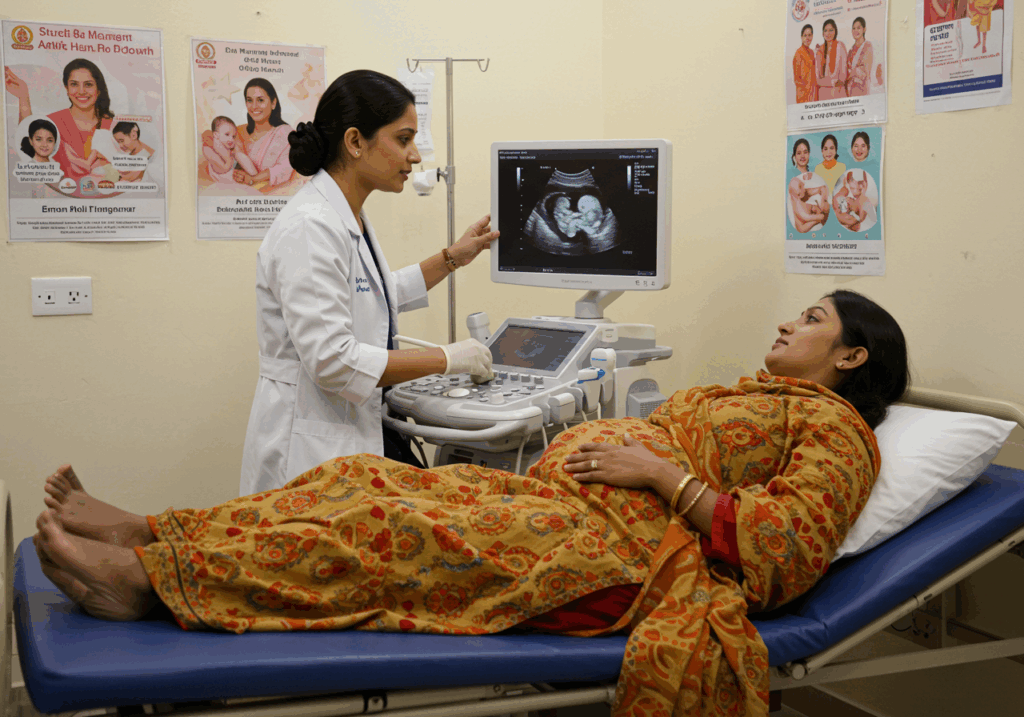
Bring both partners if at all possible. Bring the dates of your last few periods, or a screenshot of your tracking app, along with any previous scans, semen analyses or blood reports, however old. Also bring a list of every medicine and supplement you both take, including anything bought over the counter.
Expect questions about cycle length and regularity, how long you have been trying and how often, previous pregnancies including losses, any pelvic infection or surgery, period pain and its severity, and general medical history on both sides. The pain question matters more than people expect, because severe period pain can point towards endometriosis.
A pelvic ultrasound in the same visit shows the uterus, the ovarian appearance, and any fibroid or polyp. It is quick, and it answers several questions at once.
Some tests are cycle-timed, which is why the plan may span a few weeks. Hormone bloods sit early in the cycle, the progesterone check sits in the second half, and a tubal test sits after a period has finished. The semen analysis can be done any time.
The results visit is where the plan is made, and it is worth attending together. Roughly speaking the outcome falls into one of four groups: nothing abnormal found, an ovulation problem, a tubal or uterine problem, or a male factor. Each leads somewhere different.
Treatment is a ladder rather than a single decision, and most couples do not climb all of it. What determines the starting rung is the diagnosis, not how long you have been trying, which is the main argument for getting tested rather than waiting longer.
|
Step
|
Who it is for
|
What it involves
|
|---|---|---|
Myth
“Lie down with your legs up for twenty minutes afterwards.”
What is actually true
Sperm reach the cervical mucus within minutes and are not going to fall out. Studies of this have not shown a meaningful difference. Do it if it is comfortable, but do not treat it as a technique.
Myth
“Certain positions work better.”
What is actually true
There is no position that reliably improves the chance of conception. Frequency across the fertile window is the variable that actually moves the number.
Myth
“My periods are regular, so I must be ovulating.”
What is actually true
Usually true, but not always. Regular bleeding without ovulation does happen, and it is easy to check with a correctly timed progesterone test. If you have been trying for months with textbook cycles, this is worth confirming rather than assuming.
Myth
“We are not conceiving because I am stressed.”
What is actually true
Stress is real, it is worth addressing for its own sake, and severe stress can disturb cycles. But it is very rarely the whole explanation, and treating it as the answer is the most common reason couples delay a set of tests that would have found something treatable.
Myth
“If I have already had a baby, there cannot be a problem.”
What is actually true
Secondary infertility is common and often surprises people. Tubes can become blocked after an infection or a surgery, sperm quality changes with time and health, and the ovarian picture at 38 is not the one at 31.
If you take one structure away from this guide, take this one. It is what we would suggest to a couple in their early thirties who have just decided to start, and it is deliberately unglamorous.

Conception rates by age follow NICE guideline NG257. Semen reference limits are the World Health Organization 2021 lower reference limits, which are fifth-percentile values rather than pass marks. Folic acid dosing, including the situations calling for the higher 5 mg dose, follows current NICE guidance. This guide is general information and does not replace advice from your own doctor, who has your history and your results.
Your fertile window worked out from your own cycle length rather than an assumed 28 days, for the next three cycles.
If your cycles are irregular, start here. Twelve questions and where your pattern sits against the diagnostic criteria.
The most common reason for irregular ovulation, and one of the more treatable causes of difficulty conceiving.
For the cycle it works. Dates from your last period or a known conception date, with the milestones that follow.
A first fertility visit is history, a scan and a set of baseline tests, not treatment. Many couples leave with a straightforward explanation. If your cycles are irregular, or you are 35 or over and six months in, that visit is worth booking now rather than at the twelve-month mark.