
GUIDE

Pregnancy Warning Signs: What to Act On, and How Fast

Sorted into three levels of urgency, from go now, through call today, to mention at your next visit.

Reviewed by Dr. Grishma Ranjangaonkar, MBBS, DGO, ICOG Fellowship in Gynecological Endoscopy · Eva WomanCare Clinic, Vashi

Most pregnancy symptoms are uncomfortable and harmless. A small number are neither, and the hard part is that some of the serious ones feel mild: pre-eclampsia often has no symptoms until it is advanced, and reduced fetal movement does not hurt. This guide is about sorting them.

What this guide covers

The three levels of urgency

Most pregnancy symptoms are uncomfortable and harmless. A small number are neither, and the difficulty is that some of the serious ones feel mild. Pre-eclampsia often has no symptoms at all until it is advanced. Reduced fetal movement does not hurt. This guide sorts what you might notice into three groups, and the sorting is the useful part.
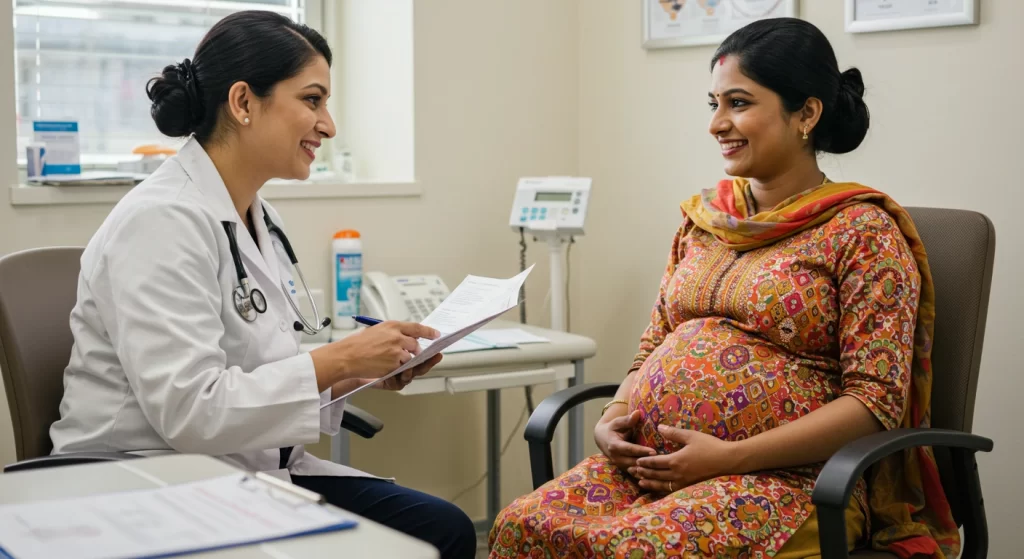
A doctor consults with a pregnant woman in a medical office setting.
Some of the most serious complications produce no symptoms at all until they are advanced, which is why the sorting matters.
Go nowEmergency department, or call an ambulanceHeavy bleedingFainting or collapseFitting or seizureSevere constant abdominal painTrouble breathingCall todayPhone the clinic, do not wait for your next visitReduced or changed movementsAny bleeding or fluid leakBad headache or vision changesFever above 38CMention at your next visitWrite it down so it does not get forgottenMild swelling of the feetHeartburn or constipationOccasional Braxton HicksRound ligament twingesWhen you are unsure which row something belongs in, treat it as the row above. Nobody at the clinic minds.
Which row does it belong inIf you are unsure between two rows, act on the higher one. Over-reporting costs an afternoon. Under-reporting is the pattern behind most preventable harm in pregnancy.

Go now: the emergencies

These need an emergency department or an ambulance, not a phone call and a wait for a callback.

Call today: do not wait for your next visit

What you notice
What it can mean
What to do

Mention it at your next visit

These are common, usually harmless, and still worth writing down so they are not forgotten in the room.

If you want a structured way to work out which group something falls into, our symptom checker takes you through 42 symptoms and tells you how urgently each should be seen.

Reduced movements: the one that gets missed

This is the single most important thing to act on in the second half of pregnancy, and it is the one women most often delay on, usually because it does not hurt and because they do not want to make a fuss. A change in your baby usual pattern of movement is a reason to be assessed the same day, every time it happens, including if it has happened before and everything was fine.

1Notice a changeFewer movements thanusual, or a differentpattern. You are the onlyperson who knows whatusual is.2Lie on your leftPut the phone down andfocus for two hours. Fewerthan ten distinctmovements is thethreshold.3Call anywayEven if you counted ten.A change in pattern is thesignal, not the count. Donot wait until morning.4What happens nextA CTG traces theheartbeat against movementfor about twenty minutes.A scan follows if anythingis unclear.If your baby is moving less than usualBeing told everything is fine is the expected outcome, and it is the entire point of coming in.
What to do if movements have changedThe count is a prompt to call, not a test you can pass. If the pattern has changed, call even when you reach ten movements.

Bleeding, and what it means at each stage

Bleeding is the symptom that frightens women most, and the honest answer is that it means different things at different points. All of it should be reported. Not all of it is bad news.

Pre-eclampsia: the signs that arrive before the diagnosis

Pre-eclampsia is the reason your blood pressure and urine are checked at every single antenatal visit. It usually produces no symptoms until it is well advanced, which is why the checks matter more than how you feel, and why skipping appointments in a pregnancy that feels fine is a genuinely bad idea.
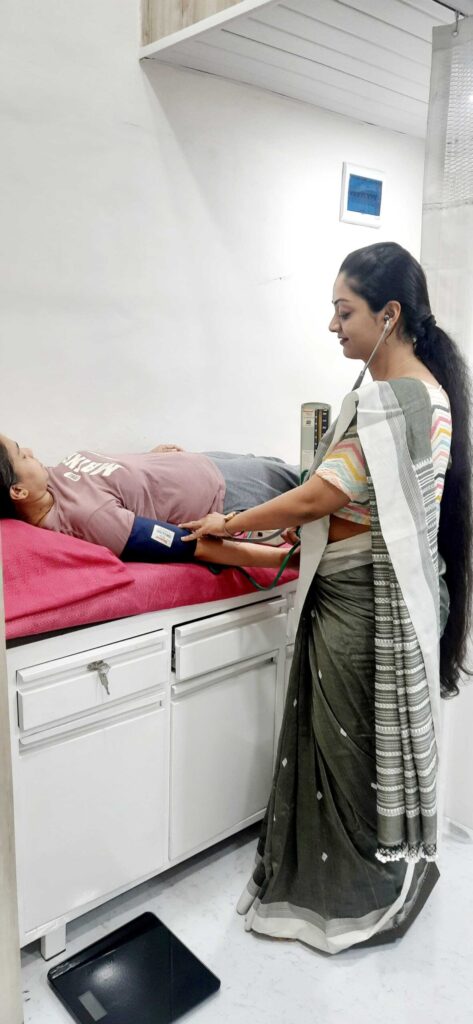
Doctor checking a pregnant woman's blood pressure at a clinic in Vashi.
This is why your blood pressure and urine are checked at every single visit, however well you feel.

Risk is higher in a first pregnancy, with a previous history of it, with chronic high blood pressure, kidney disease or diabetes, with twins, over 40, and with a BMI above the Indian cut-off. If any of those apply to you, ask specifically what your plan is, because low-dose aspirin from the second trimester is offered in some cases and it has to be started early to help.

Preterm labour before 37 weeks

Getting seen early matters here, because treatment that can delay delivery and steroids that mature the baby lungs both work best given in time.

Infection: the signs that get underplayed

Pregnancy alters immunity, and infections that would be minor otherwise can escalate. Two in particular are worth naming.

Urinary infections are more common in pregnancy because progesterone relaxes the urinary tract and the uterus presses on it. Burning, stinging, needing to pass urine constantly, cloudy or strong-smelling urine, or pain in the lower back or side all need treating rather than waiting out. Untreated they can reach the kidneys and trigger preterm labour.

Fever above 38 degrees at any stage warrants a call rather than a paracetamol and a wait. In the first trimester a sustained high fever carries its own risk to development, and at any stage the cause matters more than the temperature.

After the birth: the six weeks nobody warns you about

Almost all pregnancy advice stops at delivery, which is why postnatal warning signs get missed. Some of the most serious complications of pregnancy happen after it.

Woman peacefully rests in bed next to a personalized postpartum care plan.
Some of the most serious complications of pregnancy happen after it, which is where most advice stops.

What to say when you call

Having these four things ready makes the call faster and gets you the right advice sooner. Keep them written in the same place as your antenatal card.

This guide is general information for recognising when to seek help and does not replace the plan your own doctor has made with you. If you have been given specific instructions because of your own history, those take priority over anything here. In an emergency, go to the nearest emergency department rather than waiting for a callback.

Tools and guides that go with this

Symptom Checker

Tick what you are experiencing across 42 symptoms and see how urgently it should be seen.

Third Trimester Guide

Counting movements, baby position, and telling real labour from false.

Pregnancy Tests Guide

Why blood pressure and urine are checked every visit, and what each test is looking for.

First Trimester Guide

Early pregnancy warning signs in context, week by week.

When in doubt, call

Being seen and told everything is fine is the expected outcome and the entire point. If something has changed and you are hesitating about whether it counts, that hesitation is the reason to pick up the phone.

Questions about warning signs

A change in your baby usual pattern of movement, in the second half of pregnancy. It is the most important and the most commonly delayed, because it does not hurt and because women do not want to make a fuss. Call the same day, every time, including if it has happened before and everything was fine. Do not wait until morning, and do not try to make the baby move with something cold or sugary first.
Light spotting happens in around one in four pregnancies and the majority continue normally. It can be implantation, a sensitive cervix, or nothing identifiable. All of it should still be reported, both so it is documented and because an Rh negative woman may need an anti-D injection within a set window. Heavy bleeding, bleeding with pain, or any bleeding after 24 weeks is different and needs immediate attention.
Often you cannot, which is exactly why blood pressure and urine are checked at every visit. The signs worth acting on are a headache that painkillers do not touch, flashing lights or blurred vision, pain under the ribs on the right side, and sudden swelling of the face or hands. Gradual swelling of the feet by evening is ordinary. Sudden puffiness of the face is not.
Gradual swelling of the feet and ankles that is worse by evening and better after a night in bed is normal and very common in Indian summers. Sudden swelling, particularly of the face, hands or fingers, or swelling that arrives with a headache or visual changes, needs a call the same day. Swelling of one calf that is hot and painful is different again and needs immediate attention, because it can be a clot.
Call rather than waiting to find out. Note the time and the colour: clear or straw coloured is expected, green, brown or heavily bloodstained is not and needs immediate attention. Do not use a tampon and avoid baths, because once the membranes are open the risk of infection rises with time. If you are before 37 weeks, treat it as more urgent, not less.
No, and this is the part most people are never told. Serious bleeding, infection, clots and pre-eclampsia can all appear or worsen in the six weeks after delivery. So can postnatal depression. Heavy bleeding, fever, a hot painful calf, chest pain, severe headache or visual changes after birth all need acting on with the same urgency as during the pregnancy.
No. Being reassured repeatedly is the expected outcome of a system that is working. Reduced movements in particular should be reported every single time, however often it happens, and no maternity unit will hold it against you. The pattern behind most preventable harm in pregnancy is women deciding not to call, not women calling too much.
Call Now WhatsApp