What is forming, what you will feel, what to eat, what to avoid, and the signs that need a call today.
Reviewed by Dr. Grishma Ranjangaonkar, MBBS, DGO, ICOG Fellowship in Gynecological Endoscopy · Eva WomanCare Clinic, Vashi
The first trimester does the least visible work and the most important. Almost every major structure in your baby is built between weeks five and ten, usually before the first appointment. This guide walks the twelve weeks in order, with the symptoms explained rather than just listed.
The first trimester does the least visible work and the most important. In twelve weeks a single fertilised cell becomes a fetus with a beating heart, a brain, a spine, limbs, a face and every major organ already in place. Almost all of that happens between weeks five and ten, which is why this is the window where alcohol, smoking, certain medicines and uncontrolled diabetes do the most damage, and why folic acid has to be started before you notice anything at all.

It is also why the first trimester carries the highest chance of miscarriage. Around one in five recognised pregnancies ends this way, and the great majority are caused by a chromosomal error present from the moment of conception. Nothing you lifted, ate, felt or forgot causes them.
Sizes below are averages from ultrasound measurement, and the spread between healthy pregnancies is wide. Your own scan is the only measurement that means anything for you.
The embryo is a ball of cells, roughly the size of a poppy seed, that has just implanted into the lining of the uterus. Implantation is what starts hCG production, which is what a home pregnancy test detects. Some women notice light implantation spotting around now and mistake it for an early period.
You may feel: nothing at all, or mild cramping and sore breasts. Most women feel nothing.
The neural tube, which becomes the brain and spinal cord, is forming and closing. This is exactly what folic acid protects, and why it is recommended from before conception rather than from the first appointment. The heart is a simple tube that has begun to fold.
You may feel: the first tiredness, and the beginning of nausea for some.
The embryo is about 4 mm, the length of a grain of rice, and the heart starts beating, usually visible on a transvaginal scan from around now. Arm and leg buds appear as small paddles. The face begins as dark spots where the eyes will be.
You may feel: nausea, sore breasts, needing to pass urine more often, and a level of tiredness that surprises people.
About 10 mm. Brain tissue is growing at an extraordinary rate, and the head is disproportionately large as a result. The umbilical cord is formed and working. Kidneys are in place and will soon begin producing urine.
You may feel: peak nausea for many women, along with a heightened sense of smell that makes it worse.
About 16 mm. Fingers and toes are present but still webbed. Upper lip, nose and eyelids are forming. From the end of this week the term changes from embryo to fetus. Most first antenatal visits happen somewhere between now and week 10.
You may feel: bloating, constipation, mood swings, and food aversions that appear overnight.
About 23 mm. The fetus starts to move, though far too faintly for you to feel it. Elbows can bend. External genitalia are forming but not yet distinguishable. Essential organs are all present in basic form.
You may feel: the uterus is now roughly the size of a large orange, though nothing shows from outside.
About 31 mm. The most vulnerable period for major structural development is finishing. Fingers and toes have separated. Tooth buds are forming. From here the work shifts from building to growing.
You may feel: nausea often starts to lift for some women, though for many it runs on to week 14 or beyond.
About 41 mm. The head is still around half the total length. The fetus can open and close its fists and is beginning to swallow amniotic fluid. The nuchal translucency scan can now be done, and the window runs to 13 weeks and 6 days.
You may feel: a little more energy returning, and the first hint of a waistline change.
About 54 mm, or roughly the size of a lime. All major organs are formed. Fingernails are appearing. Reflexes are developing, so the fetus will move if prodded during a scan. The risk of miscarriage drops sharply from this point.
You may feel: noticeably better, in most cases. This is the week many women choose to tell people.
Almost everything on this list is caused by the same two things: a very rapid rise in hCG and progesterone, and a large increase in blood volume. Knowing the mechanism makes most of the symptoms less alarming.
|
Symptom
|
Why it happens
|
What actually helps
|
Call if
|
|---|---|---|---|
The name is misleading. Around eight in ten women get some nausea, it can arrive at any hour, and evening is a common time for it. It typically starts around week 6, peaks around week 9, and eases between weeks 12 and 16. A minority carry it much longer, and a small number never get it at all, which is also completely normal and not a sign that anything is wrong.

You do not need extra calories in the first trimester. What rises sharply is your requirement for specific nutrients, at exactly the point when nausea is making balanced eating hardest. If you can only manage a few things, prioritise the supplements and let the diet catch up in the second trimester.
|
What
|
Why it matters now
|
Where it comes from
|
|---|---|---|
The genuine list is short. Most of what gets added to it is folklore, and carrying twenty unnecessary restrictions makes it harder to hold the five that matter.
Things you can stop worrying about, because they do not cause miscarriage: normal exercise, sex in an uncomplicated pregnancy, ordinary lifting, reaching above your head, travelling, working, hot weather, papaya in normal amounts, and whatever you did in the two weeks before you knew.
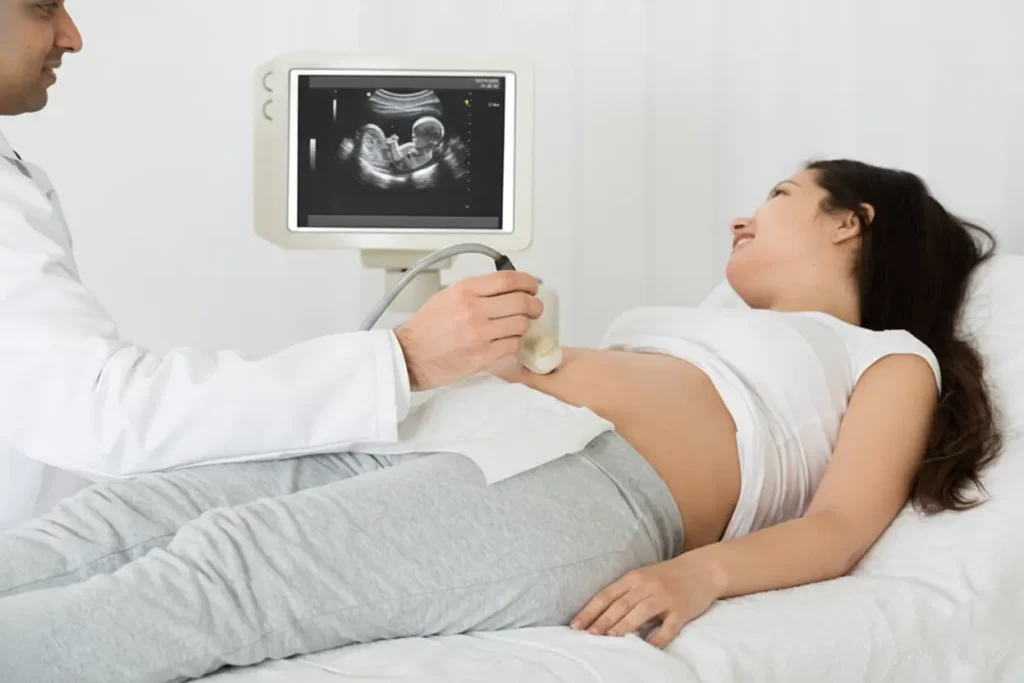
The first visit usually happens between weeks 6 and 10. Expect it to be long, because most of the baseline work is done in one sitting.
Our pregnancy tests guide explains what each of these is looking for and what the results mean, including the screening tests that only give you a probability rather than an answer.
Light spotting, on the other hand, occurs in around one in four pregnancies and most of those continue normally. Report it, but do not assume the worst. Mild one-sided twinges as the uterus grows and the ligaments stretch are also very common and usually mean nothing.
The first trimester is often the hardest emotionally and the one you are least allowed to talk about, because many women have not told anyone yet. You feel unwell, you are exhausted, nothing shows, and you are carrying both excitement and the knowledge that this is the riskiest stretch. That combination is genuinely difficult and it is not a sign that you are ungrateful or unready.
Telling one or two people early, rather than waiting for the twelve-week mark, is worth considering. The convention of secrecy exists to spare you having to explain a loss, but it also means going through the worst of it without support. That is a trade-off you are allowed to make differently.
Fetal size figures are averages from routine ultrasound measurement and vary widely between healthy pregnancies. The fetal weight chart is from the WHO Fetal Growth Charts (Kiserud et al., PLOS Medicine 2017, CC BY 4.0). This guide is general information and does not replace advice from your own doctor.
Your due date from your last period, a scan, a conception date or an IVF transfer, with the realistic range around it.
Every scan and blood test across the forty weeks, what each looks for, and what a screening result actually means.
Weeks 13 to 28. The anomaly scan, first movements, the glucose test and weight gain.
Twenty-three claims you will be told in India, checked against the evidence.
How much extra to eat, the nutrients that matter, and why tea timing decides your iron levels.
Sorted by urgency: what means go now, what means call today, and what can wait for your next visit.
The first visit sets your dates, checks for the things that are easiest to treat early, and gives you somebody to ask. If you have had a positive test, somewhere between six and ten weeks is the right time to come in.