The anomaly scan, the first movements, the glucose test, and how much weight is actually right for you.
Reviewed by Dr. Grishma Ranjangaonkar, MBBS, DGO, ICOG Fellowship in Gynecological Endoscopy · Eva WomanCare Clinic, Vashi
For most women this is the stretch where pregnancy becomes enjoyable. Nausea lifts, energy returns and the bump arrives. It is also when the two most significant tests of the whole pregnancy happen, and when the practical preparation is easiest to do.
The placenta takes over hormone production from the ovaries at around week 12, and that single handover explains most of what improves. hCG, the hormone most closely linked to nausea, falls away. Energy returns. Appetite comes back. For many women the second trimester is the only stretch of pregnancy where they feel straightforwardly well, which is exactly why it is the right window for travel, for dental work you have been putting off, and for the practical preparation that becomes hard later.

The work happening inside shifts too. The first trimester built structures. The second grows them and switches them on. Hearing, swallowing, breathing movements, sleep and wake cycles and the beginnings of fat storage all arrive in these sixteen weeks.
Around 8 to 9 cm. Fingerprints are forming. The fetus can suck its thumb and makes facial expressions, though not in response to anything. Vocal cords develop. Your uterus rises out of the pelvis, which is why the constant need to pass urine often eases around now.
You may notice: nausea lifting, energy returning, and appetite arriving suddenly.
Around 11 to 12 cm and roughly 100 grams. The bones of the inner ear are in place, so the fetus starts to register sound, mostly your heartbeat, your digestion and the muffled version of your voice. Legs are now longer than arms. Some women feel the first flutters this fortnight, particularly in a second pregnancy.
You may notice: a small but definite bump, and nasal congestion caused by increased blood flow to the mucous membranes.
Around 13 to 14 cm. The fetus begins laying down brown fat, which will regulate body temperature after birth. Myelin starts coating the nerves. Yawning, stretching and hiccuping appear. The anomaly scan window opens at 18 weeks.
You may notice: round ligament pain, which is a sharp catch low on one side when you stand or turn too quickly. It is stretching, not damage.
Around 15 to 25 cm depending on whether length is measured to the rump or the heel, and roughly 300 grams. Vernix, a waxy coating, covers the skin. The anomaly scan usually happens now. Most first-time mothers feel definite movement somewhere in this fortnight.
You may notice: the bump is unmistakable, and the movements finally feel like a baby rather than digestion.
Around 500 grams. Sleep and wake cycles establish, and they will not match yours. Taste buds form. Eyebrows and eyelids are complete. The fetus responds to loud noise from outside with a startle.
You may notice: movements settling into recognisable times of day, usually when you finally sit down.
Around 600 grams. The lungs begin making surfactant, the substance that lets air sacs stay open. Around 24 weeks is the point from which survival outside the uterus becomes possible with intensive care, which is why this week is a milestone in obstetric terms. The glucose tolerance test window opens.
You may notice: heartburn, as the growing uterus presses upward on the stomach.
Around 800 to 900 grams. The eyes open for the first time. Lung development continues rapidly. The fetus responds to your voice with a change in heart rate, which is the first evidence of recognition rather than reflex.
You may notice: back pain as your centre of gravity shifts, and swelling in the feet by evening.
Around 1 kilogram. Brain tissue develops fast and the smooth surface begins to fold. Regular breathing movements practise the muscles. Eyelashes are present. From 28 weeks you are in the third trimester and appointments become more frequent.
You may notice: breathlessness, leg cramps at night, and Braxton Hicks tightenings that come and go without pattern.
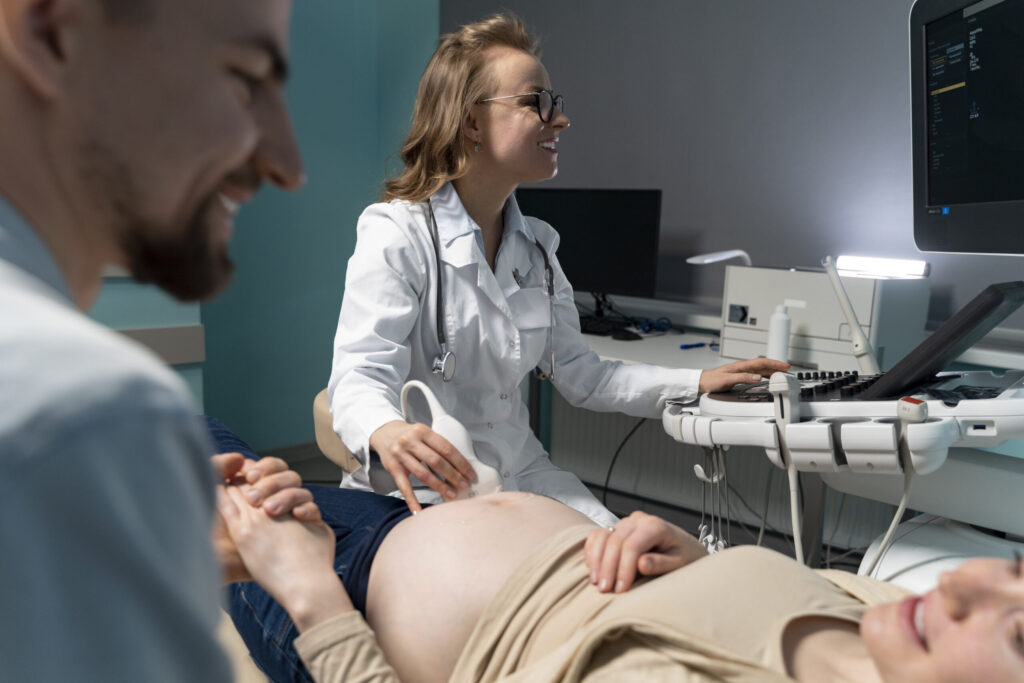
Usually done between 18 and 22 weeks, this is the most thorough look anyone will take at your baby before birth. It takes 30 to 45 minutes and it is a systematic examination, not a photo session, which is why the sonographer goes quiet and why the room can feel tense even when everything is fine.
First-time mothers usually feel definite movement between 18 and 22 weeks. If you have been pregnant before you may recognise it as early as 16. An anterior placenta, meaning one lying on the front wall of the uterus, cushions the movements and can delay it by two or three weeks, which is a normal variation and not a problem.
Early movements feel like bubbles, a muscle twitch or wind. They come and go for several weeks before becoming consistent. What matters in the second trimester is that movements are appearing and gradually increasing, not that they follow any pattern. Formal kick counting belongs to the third trimester, once a pattern has established.
Gestational diabetes is common in India, more common than in most Western populations, and South Asian ethnicity is itself a risk factor independent of weight. It usually produces no symptoms at all, which is the entire reason it is screened for rather than waited for.
The test is done between 24 and 28 weeks, or earlier and repeated if you have risk factors. You drink a measured glucose solution and blood is taken at set intervals. It is unpleasant rather than difficult. Follow the fasting instructions exactly, because a test done wrong has to be repeated.
|
Raises your risk
|
Why
|
|---|---|
If it is picked up, the great majority of cases are managed with diet and monitoring alone, and a minority need medication. Managed well, outcomes are close to normal. Left undetected it raises the risk of a very large baby, birth complications and later type 2 diabetes for you. Our BMI calculator uses the Indian cut-offs, which are the ones that apply here.
Most weight gain happens in the second and third trimesters, and the right total depends almost entirely on where you started. The ranges below are the international ones, based on the WHO BMI categories. There is a genuine complication for Indian women: the Asian-Indian cut-offs classify overweight from a BMI of 23 rather than 25, so a woman sitting at 24 is in the normal band by the table below and in the overweight band by Indian criteria. In practice most doctors here aim at the lower end of the relevant range. Yours will set a target for you.
|
Starting BMI
|
Category
|
Total gain over the pregnancy
|
Roughly per week in trimesters 2 and 3
|
|---|---|---|---|
Energy needs rise by roughly 350 calories a day from the second trimester, which is one substantial snack rather than a second meal. Iron, calcium, protein and fibre all matter more than the calorie count.
|
What
|
Why
|
What helps
|
|---|---|---|

Fetal weight figures are from the WHO Fetal Growth Charts (Kiserud et al., PLOS Medicine 2017, CC BY 4.0). Weight gain ranges follow the widely used international recommendations by pre-pregnancy BMI category; your own target should come from your doctor. This guide is general information and does not replace individual medical advice.
Indian and international cut-offs side by side, which decides your weight gain target.
The anomaly scan and the glucose test explained properly, along with everything else.
Weeks 1 to 12, week by week, if you want to go back over what happened.
Weeks 29 to 40. Kick counting, baby position, labour signs and the hospital bag.
How much extra to eat, the nutrients that matter, and why tea timing decides your iron levels.
Sorted by urgency: what means go now, what means call today, and what can wait for your next visit.
The window runs from 18 to 22 weeks and it is the most detailed look anyone takes at your baby before birth. If you are approaching it, or your glucose test is due, book in and get both done in the right window rather than late.